

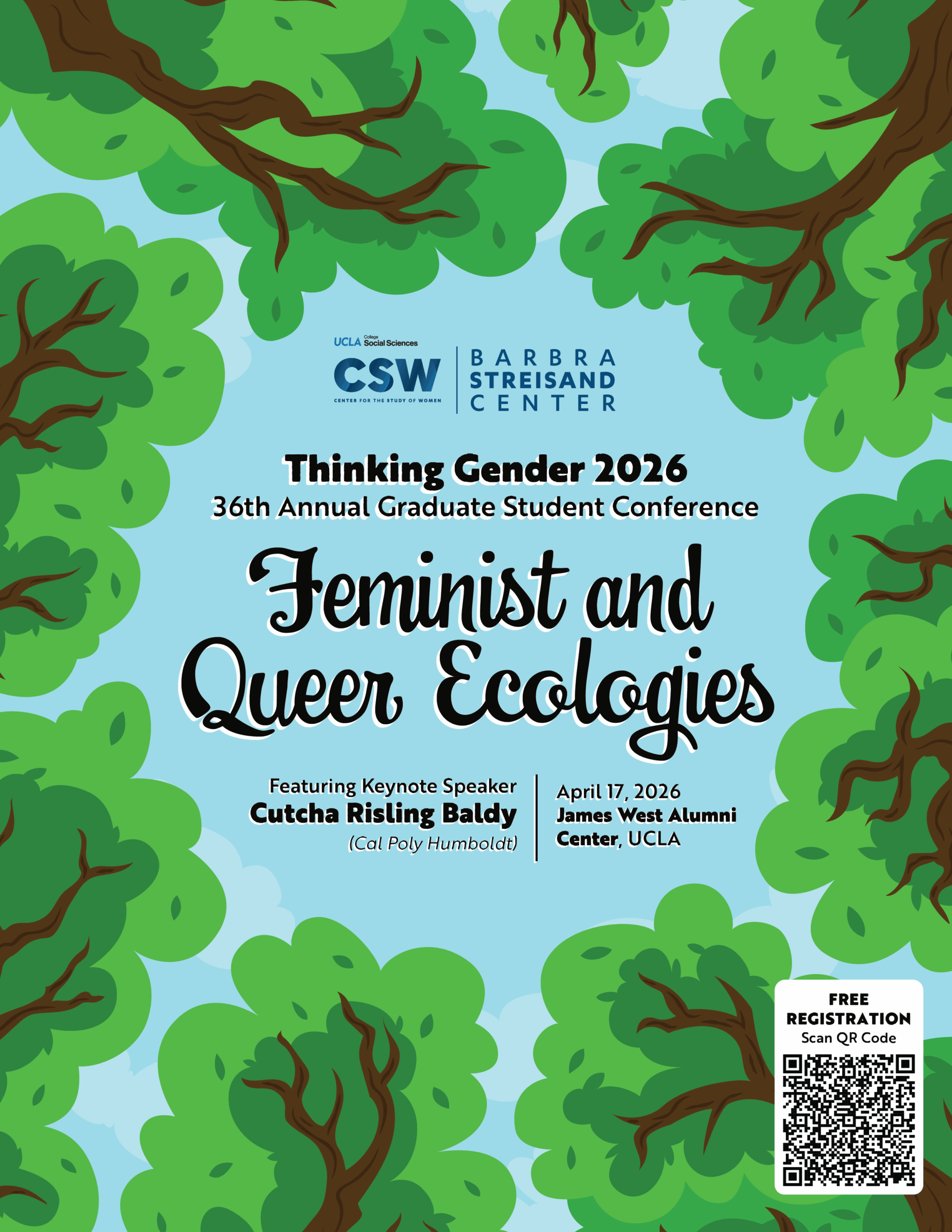
Thinking Gender 2026
36th Annual Graduate Student Research Conference
“Feminist and Queer Ecologies”
Friday, April 17, 2026
James West Alumni Center, UCLA Campus
View Conference Program and Schedule
Watch Videos from Thinking Gender 2026
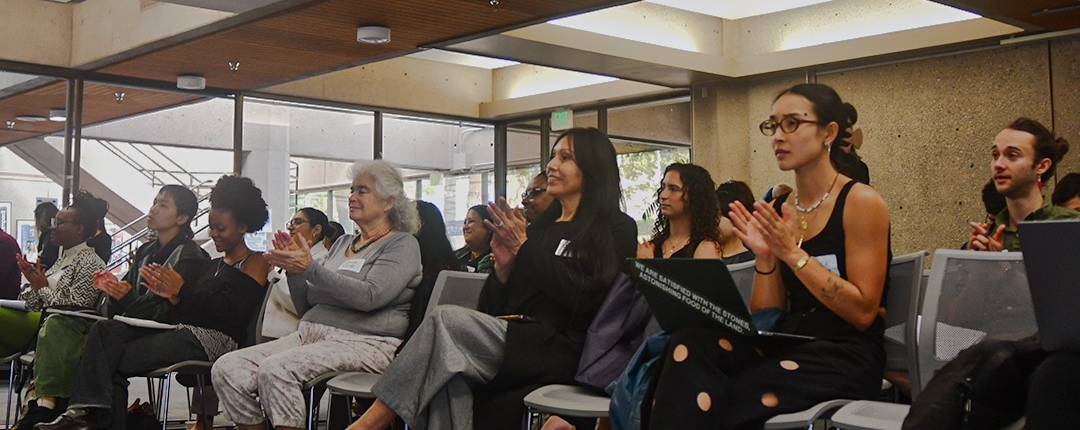
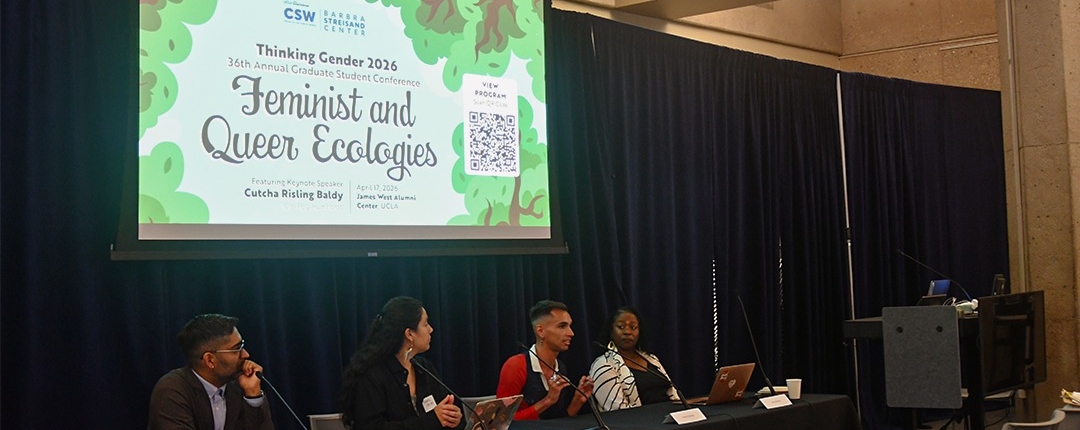
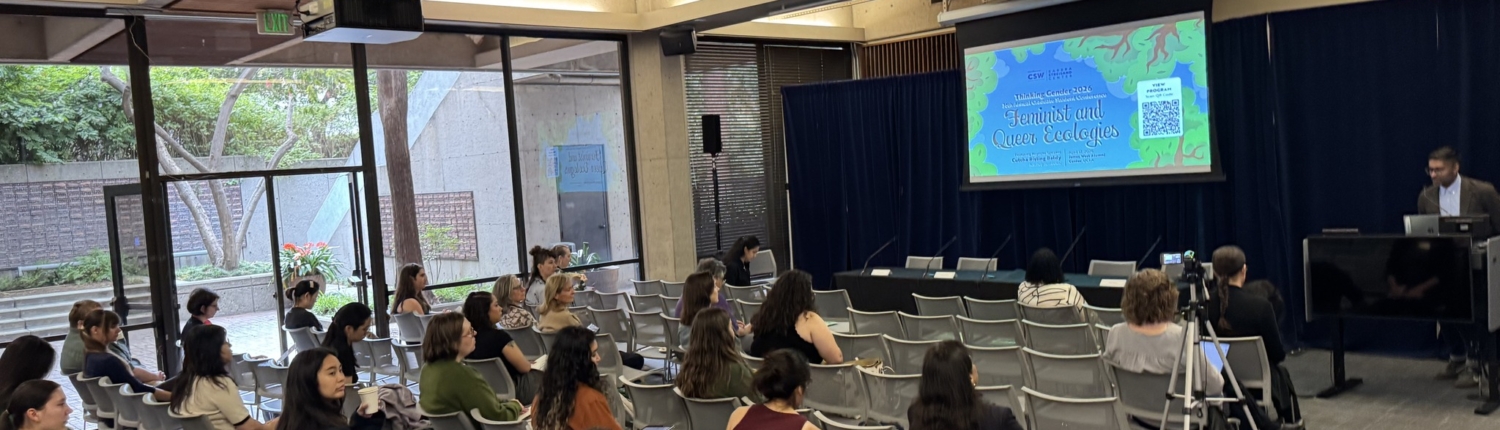
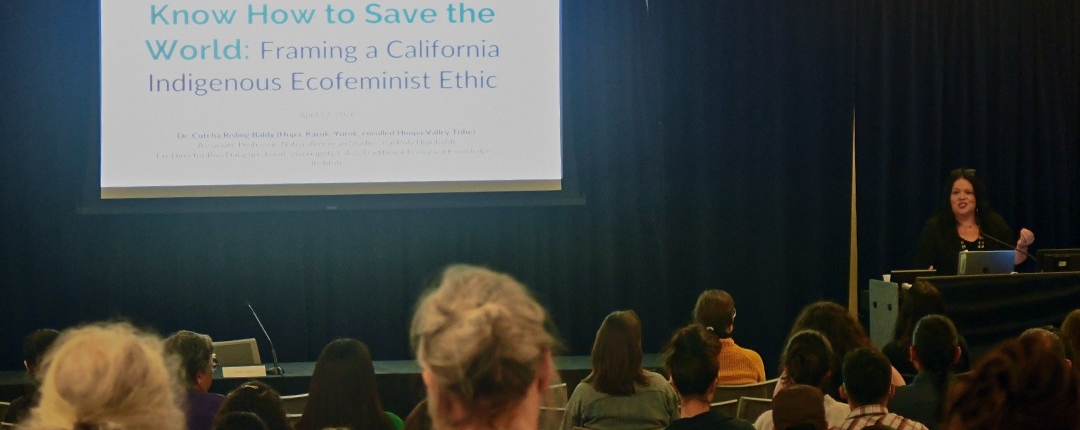
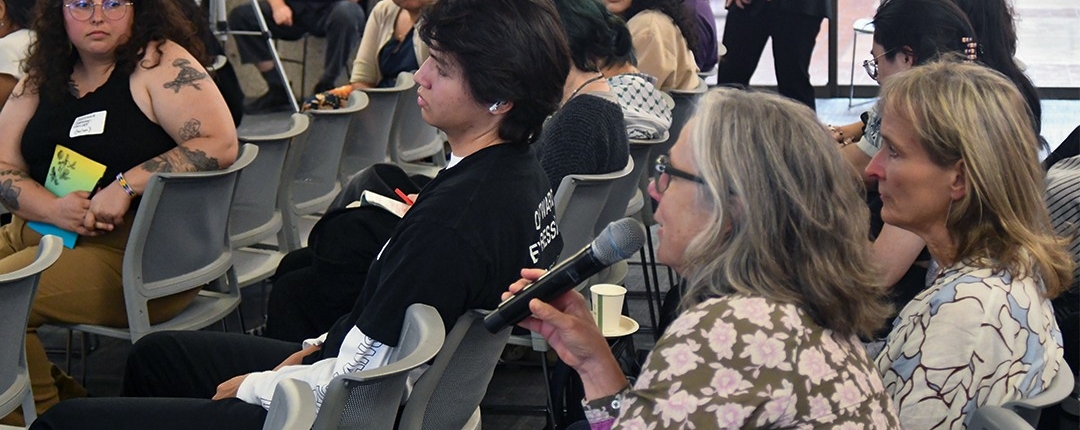
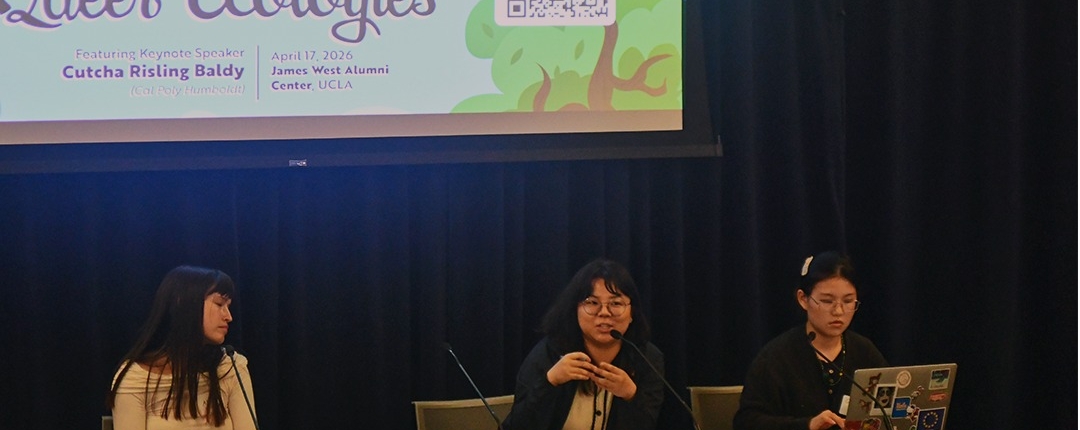
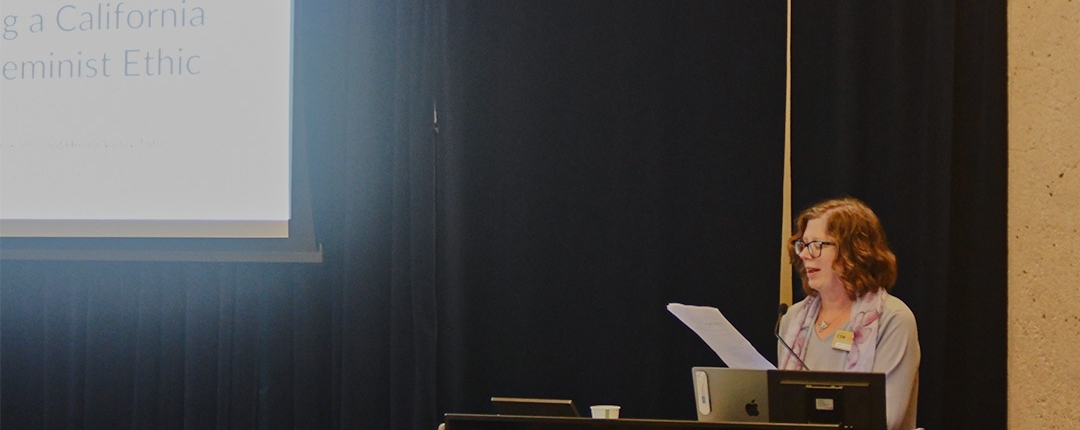
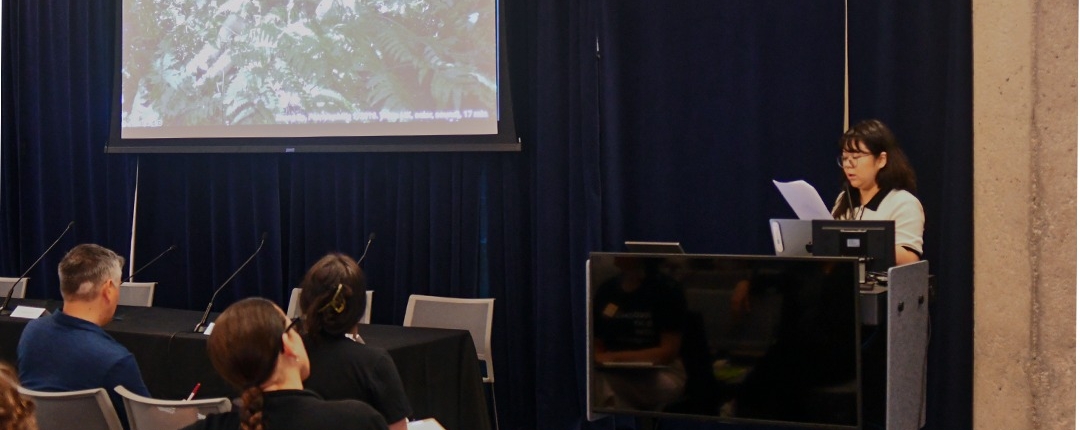
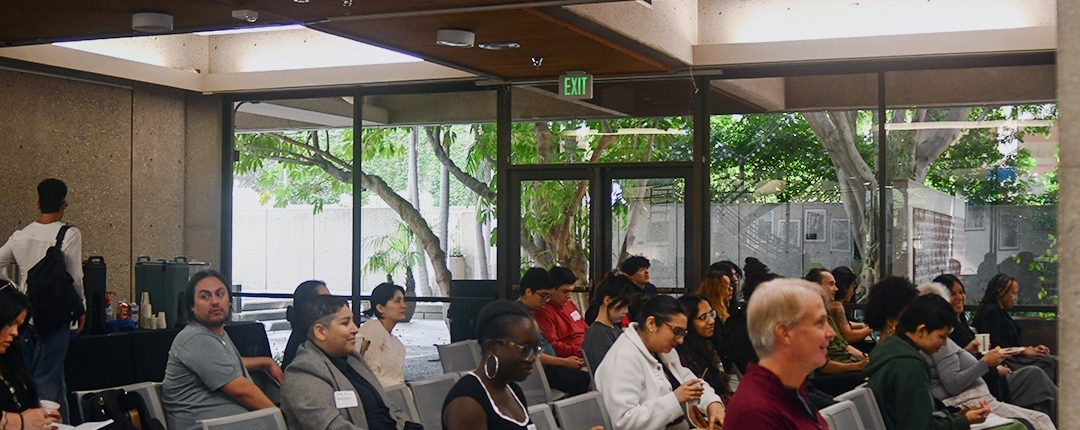
Join us for a day of graduate student presentations highlighting innovative research at the intersections of gender, sexuality, environment, and justice. The conference will feature keynote speaker Cutcha Risling Baldy (Cal Poly Humboldt; NAS Rou Dalagurr Food Sovereignty Lab & Traditional Ecological Knowledges Institute), whose work centers Indigenous feminisms, land relations, and food sovereignty.
“Feminist and Queer Ecologies,” explores how environments and ecologies are shaped, understood, and contested through relations of sex, gender, and sexuality. The theme also considers how feminist and queer theorists, artists, and organizers have drawn on ecological processes and environmental knowledge to build new insights, movements, and practices.
Gendered and colonial ideas of wilderness, domesticity, and reproduction have historically shaped landscapes and environmental policy. At the same time, feminist and queer methodologies—from place-based storytelling to multimodal practice—offer critical tools for climate resilience, environmental justice, and community well-being. Around the world, social movements resisting environmental injustice—from Standing Rock to Flint, from the Everglades to rural India—have been led by women and gender-expansive people. Climate change and climate justice continue to affect communities differentially along lines of gender, sexuality, race, and class, revealing how struggles for ecological flourishing are inseparable from feminist and queer justice.
Feminist and queer ecologies demand multidisciplinary collaboration. This year’s theme invites environmental scientists, humanists, social scientists, artists, organizers, and practitioners to come together across methods, disciplines, temporalities, species, and geographies. It encourages experimentation with scientific inquiry, ethnography, storytelling, political theory, environmental history, modeling, and other forms of knowledge-making and truth-telling.
Conference Keynote:
“Indigenous Women Know How to Save the World: Framing a California Indigenous Ecofeminist Ethic.”
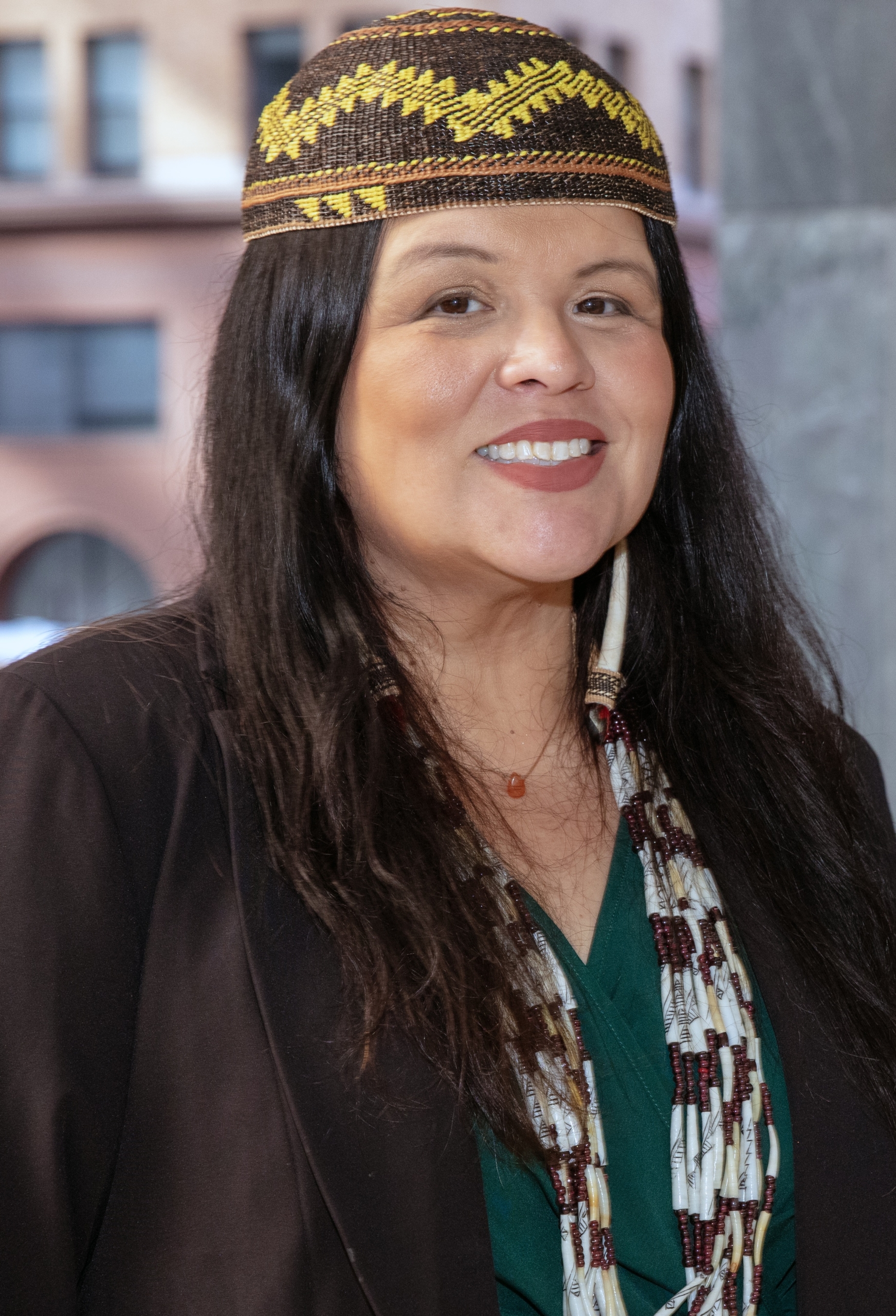
This talk builds a California Indigenous ecofeminist ethic grounded in place, fugitivity, resistance, and humor. It asks what it means to rethink how we talk about climate change and to recognize how land, water, and more than human relatives model resilience, refusal, and justice. By examining examples from California such as the damming, diversion, and even paving over of rivers, this talk argues that environmental devastation is not a future fear but an ongoing history that Indigenous peoples have survived and theorized for generations. Green colonialism, conservation land grabs, and the expectation that Indigenous communities must solve climate change while contributing the least to it exposes the absurdity and gaslighting in contemporary environmental discourse and policy. At the same time, Indigenous women who have long been leaders in ecological knowledge and restoration are kept busy navigating patriarchal structures rather than being supported as the scientific and cultural leaders they already are. Ultimately, this talk explores how the world around us is already feminist, already resistant, and already offering models for collective thriving beyond capitalism, patriarchy, and extraction. Indigenous peoples carry structures and methodologies that are sustainable, relational, and deeply grounded in place. We have lived them. And we are still building these futures now.
Cutcha Risling Baldy, Associate Professor of Native American Studies at Cal Poly Humboldt researches Indigenous feminisms, California Indians, Environmental Justice, Traditional Ecological Knowledge and decolonization. She is also the Co-Director of the NAS Rou Dalagurr Food Sovereignty Lab & Traditional Ecological Knowledges Institute.
In 2025 Dr. Risling Baldy along with Co-Director Dr. Kaitlin Reed were awarded the James Irvine Foundation Leadership Award for their work with the lab. Her book: We Are Dancing For You: Native feminisms and the revitalization of women’s coming-of-age ceremonies received “Best First Book in Native American and Indigenous Studies” at the 2019 Native American Indigenous Studies Association Conference. She received her Ph.D. in Native American Studies at UC Davis; her M.F.A. in Creative Writing from San Diego State University; and her B.A. in Psychology with a Specialization in Health and Development from Stanford University. She is also the volunteer Executive Director for the Native Women’s Collective, a nonprofit organization that focuses on the continued revitalization of Native American arts and culture. She is Hupa, Karuk, and Yurok and enrolled in the Hoopa Valley Tribe.
Thinking Gender Blog Posts
 https://csw.ucla.edu/wp-content/uploads/2022/10/Pic-Shimuzu-1-scaled-e1666979318298.jpg
1292
2297
Rosemary Grant
https://csw.ucla.edu/wp-content/uploads/2022/10/Blue-CSWBSC_combo-long-1030x356.png
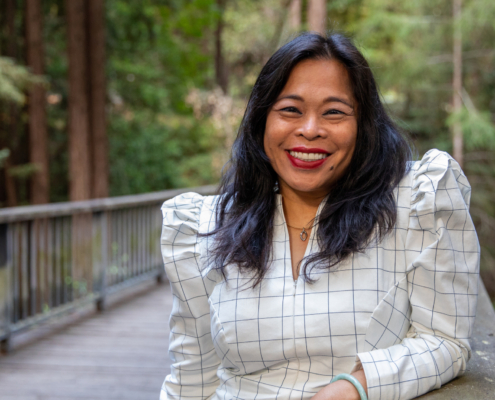
Rosemary Grant2023-02-01 09:51:012023-02-01 12:37:36Celine Parreñas Shimizu as Keynote Facilitator at Thinking Gender 2023
https://csw.ucla.edu/wp-content/uploads/2022/10/Pic-Shimuzu-1-scaled-e1666979318298.jpg
1292
2297
Rosemary Grant
https://csw.ucla.edu/wp-content/uploads/2022/10/Blue-CSWBSC_combo-long-1030x356.png
Rosemary Grant2023-02-01 09:51:012023-02-01 12:37:36Celine Parreñas Shimizu as Keynote Facilitator at Thinking Gender 2023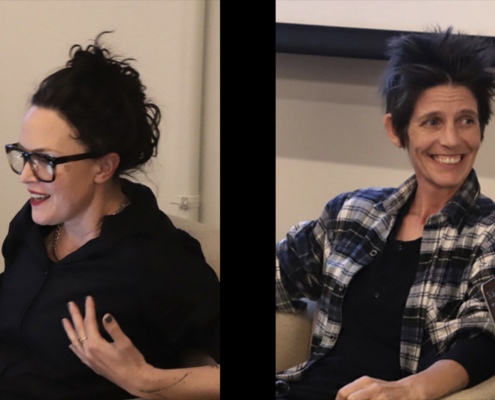 https://csw.ucla.edu/wp-content/uploads/2023/02/TgKeynoteBlog2.jpg
598
977
Rosemary Grant
https://csw.ucla.edu/wp-content/uploads/2022/10/Blue-CSWBSC_combo-long-1030x356.png
Rosemary Grant2023-02-01 09:42:462023-02-01 12:37:08T.L. Cowan and Jas Rault at Thinking Gender 2023
https://csw.ucla.edu/wp-content/uploads/2023/02/TgKeynoteBlog2.jpg
598
977
Rosemary Grant
https://csw.ucla.edu/wp-content/uploads/2022/10/Blue-CSWBSC_combo-long-1030x356.png
Rosemary Grant2023-02-01 09:42:462023-02-01 12:37:08T.L. Cowan and Jas Rault at Thinking Gender 2023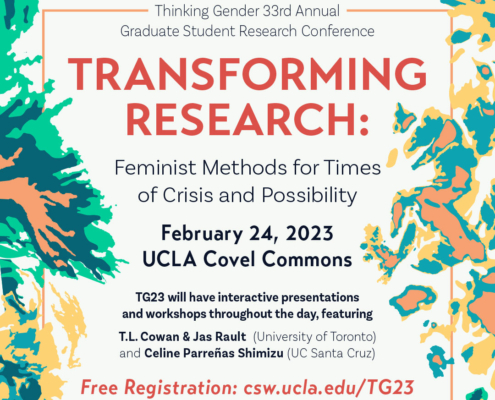 https://csw.ucla.edu/wp-content/uploads/2022/10/TG23-Square.jpg
1080
1080
webteam
https://csw.ucla.edu/wp-content/uploads/2022/10/Blue-CSWBSC_combo-long-1030x356.png
webteam2022-11-15 10:16:162022-11-15 10:16:16On Thinking Gender 2023: A Dialogue between Jasmine Nadua Trice and Zizi Li
https://csw.ucla.edu/wp-content/uploads/2022/10/TG23-Square.jpg
1080
1080
webteam
https://csw.ucla.edu/wp-content/uploads/2022/10/Blue-CSWBSC_combo-long-1030x356.png
webteam2022-11-15 10:16:162022-11-15 10:16:16On Thinking Gender 2023: A Dialogue between Jasmine Nadua Trice and Zizi LiFire Tender Film Screening
Tuesday, February 10, 2026
12:15–1:15 PM | CSW|Streisand Center
Join us for a screening of Fire Tender, directed by Roni Jo Draper (Yurok), followed by a discussion.
Fire Tender tells the story of Yurok tribal members returning to traditional fire practices as an essential form of land stewardship. The film centers on Margo Robbins—grandmother, cultural educator, healer, and Indigenous fire practitioner—who is leading efforts to restore Yurok fire sovereignty: the right to use fire for tribal land care, a practice outlawed under settler colonial policies.
Cosponsors
African American Studies Department
American Indian Studies Center
American Indian Studies Department
Anthropology Department
Asian American Studies Center
Asian American Studies Department
Bixby Center to Advance Sexual and Reproductive Health Equity
Center for Community Engagement
Center for the Study of Racism, Social Justice & Health
Chicana/o and Central American Studies Department
Chicano Studies Research Center
Critical Race Studies Program (Law)
Department of Geography
Disability Studies
English Department
Gender Studies Department
Graduate Division
Humanities Division
Information Studies Department
Institute of American Cultures
Institute of Society and Genetics
Institute of the Environment and Sustainability
Institute on Inequality and Democracy at UCLA Luskin
International Institute
Iris Cantor Women’s Health Center
Labor Center
Laboratory for Environmental Narrative Strategies
LGBTQ Campus Resource Center
LGBTQ Studies Program
Luskin Center for Innovation
Ralph J. Bunche Center for African American Studies
School of Engineering
School of the Arts and Architecture
School of Theater, Film and Television
Social Welfare Department
Sociology Department
Water Resources Group
Friendly Reminder: Seating is first-come, first-served. Due to frequent no-shows, we overbook our events; a reservation does not guarantee a seat. Please arrive early. We appreciate your understanding.