
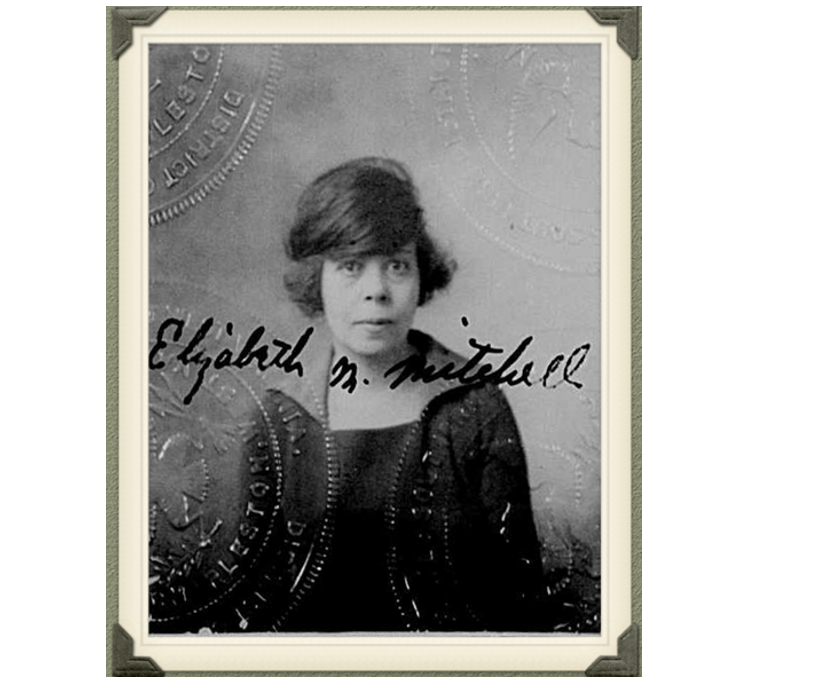
Woman with a Movie Camera: A film
Scott’s project is a film exploring and reconstituting the films of Elizabeth Mitchell, the earliest known U.S. Black woman documentarian, documentary cinematographer, and one of the very earliest Black diasporic filmmakers. While there are records of the contents of her films, the films are not, as far as we know, extant. Mitchell, who has never before been written about, aimed to create a transnational exchange in Black images across the Atlantic. She journeyed to Africa and what she called “Black Europe” in 1920 to make a film that she finished the same year and distributed herself in the US.
During the US tour of her film, she shot more footage, preparing it for foreign distribution. Importantly Mitchell’s film work essentially centered in a theory and history of land, water, and environment that sought to unite the groundedness of the places she experienced through travel with a politics of geography that was sustainable. She documented sites ravaged by war and the eco-violence of colonialism in Africa, Black France, and the US. Also, however, countering the entwined forces of environmental racism and Black stereotype, Mitchell engaged with maritime cultures of the Black Atlantic and Mediterranean, seeking to find and connect spaces and sites of Black freedom through a global exchange of cinematic images between North Africa, Black Europe (Italy and France particularly) and the United States.
People

Ellen Scott
School of Theater, Film and Television
Ellen C. Scott is Associate Professor in FTVDM. Her work explores Black thought, labor, and writing across film history. Her first book Cinema Civil Rights (Rutgers UP, 2015) exposes the Classical Hollywood-era studio systems’ and state censors’ careful repression of civil rights images, concluding with Black activists’ repurposing of Hollywood’s latent imagery into resistant spectatorship. An Academy scholar, her current book projects explore 1) Black women’s critical writing on cinema from 1896-1981, when the first Black women made feature films, 2) the history of slavery’s intersections with American film history.