
Brown Exposures
Brown Exposures will focus on experimental Latinx and queer punk photography in California and New York City from 1979 to 95 to show how visualizing intimacy, play, and kinship constituted the quotidian worlds of subjects neglected by the rapid privatization of the public sphere. Utilizing archival materials from a group of 1980s queer punk photographers known as The Boston School, which included Morrisroe, Goldin, and Armstrong, Brown Exposures will draw connections between their archive and the photographic, video, and literary works of queer Chicanx visual artists Diane Gamboa, Laura Aguilar, Reynaldo Rivera, and Lourdes Portillo, which I term the Los Angeles School. The Boston School produced intimate photographs with saturated colors, while the LA School yielded equally intimate scenes through grainy, high- contrast, black and white images.
To avoid the easy move of ethnic-siloing, each chapter will read a photographer from each school to discuss the historical connections behind their aesthetic work—this is key if we are to understand systemic oppression in our current moment. Many of these visual creators utilized literary means (lyric poetry, experimental prose, journaling, and inter- textual marginalia scribbled on the photos themselves) to index the ways language structures the visual realm and how visuality operates through exposure and speed. Exposure and speed act as heuristics to describe the unspeakable disrepair the Reagan administration inflicted on U. S. disenfranchised communities, whether marginalized because of sexual orientation, gender expression, health, ethnicity/race, single- parent households, or being working- poor.
In other words, these communities can be thought of as exposed to policing strategies, lethal drugs, surveillance, pollution, malfeasance, and the elements, yielding lives lived at high speed toward death, illness, and incarceration. Exposure and speed comprise the operations of what I’ ll theorize as the literary aperture, a nodal point of infinite compression/expansion of information, in turn othering the object of its gaze.
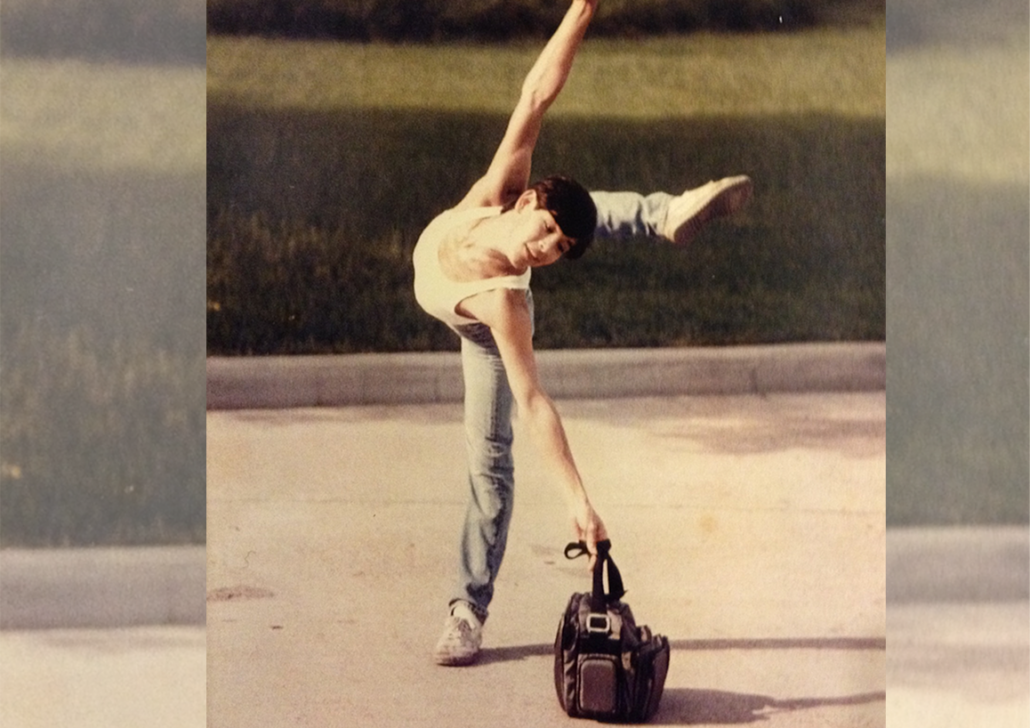
Image caption: Tío Carlos (1990): A family photograph of the author’s great uncle who passed from AIDS complications in 1992. Photo taken by the author’s gay uncle, Eddie Guzmán.
People
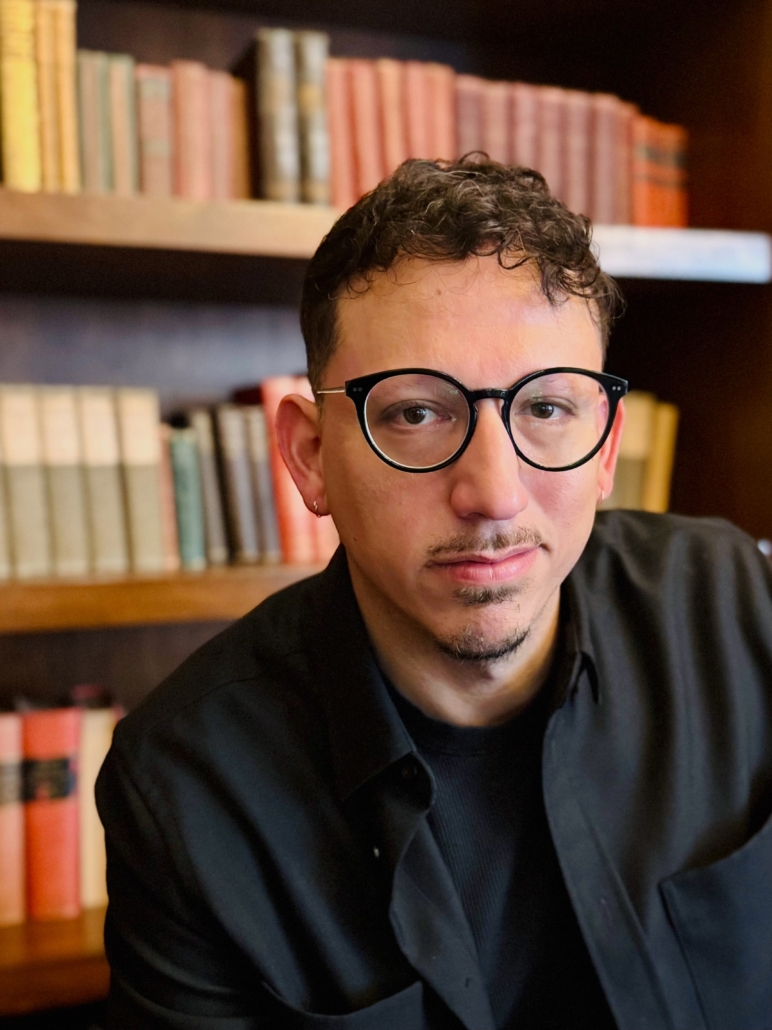
Joshua Javier Guzmán
Joshua Javier Guzmán is Associate Professor and Chair of UCLA’s Department of Gender Studies. He earned a PhD in Performance Studies from NYU and was a UC President’s Postdoctoral Fellow at UC Berkeley. Author of Dissatisfactions: Queer Latinidad and the Politics of Style (NYU Press, 2024), he explores how Latino actors stylized their discontent with the US nation and activism against systemic violence in post-1968 Los Angeles. He received the Andy Warhol Foundation Arts Writers Grant and is editor-in-chief of Aztlán: A Journal of Chicano Studies.