
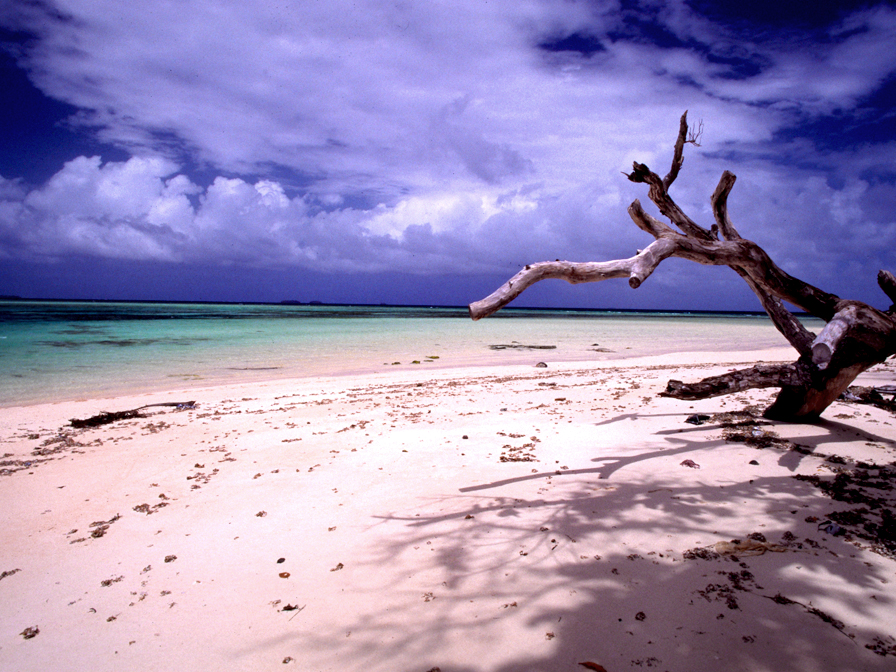
Colonial Climates: Indigenous Futures Beyond the Human
This project examines how climate change functions as both a material and emotional extension of colonial power, particularly through Western, human-centered (anthropocentric) frameworks that have contributed to environmental degradation. The project argues that Indigenous ontologies—especially those emphasizing more-than-human relationality—offer critical alternatives for understanding and addressing the climate crisis. Drawing on interdisciplinary methods across Environmental Studies, Indigenous Studies, and Performance Studies, the book analyzes topics such as climate denialism, biopolitics, and adaptation technologies alongside Indigenous cultural production and activist performance, highlighting how these practices challenge colonial definitions of the human and imagine more relational, sustainable futures.
Focusing on Oceania—and especially Micronesia—the project centers regions that contribute minimally to global emissions yet face some of the most severe climate impacts. Through ethnographic research and oral histories in Chuuk, as well as engagement with organizations like the Center for Island Sustainability and the Micronesia Climate Change Alliance in Guam, the research documents how Indigenous communities are experiencing and responding to climate change in everyday life. It emphasizes that, contrary to dominant narratives of vulnerability, Indigenous ecological knowledge and cultural practices are actively shaping innovative, locally grounded climate solutions, offering vital models for resilience and environmental justice.
People

Angela Robinson
School of Theater, Film and Television
Angela L. Robinson is an anti-colonial Chuukese scholar who specializes in Indigenous feminisms, sciences, and ontologies, Native Pacific performance and aesthetics, interrelations of the human and more-than-human, and global social movements for environmental and climate justice. Robinson’s research agenda takes up three primary concerns: how colonial and imperial relations of power are circulated, replicated, and naturalized through time and space; what kinds of critical tensions and possibilities arise by reading Indigenous performance and cultural production as politically mediated texts; and, how Indigenous peoples practice and theorize justice and self-determination in robust and expansive ways. Her book project, provisionally titled Colonial Climates: Indigenous Futures Beyond the Human, addresses these issues by examining how climate change functions as a colonial regime for Indigenous peoples by furthering land dispossession, resource depletion, cultural loss, and impoverishment. Highlighting the ways in which climate change operates as an incredible affective and material force of colonial power, this project tracks the human in both manifestations of anthropocentric colonial Enlightenment thought and anthropogenic environmental degradation. At the same time, Robinson examines how Indigenous ontologies of intercorporeality between humans and non-humans, as expressed in Indigenous Pacific environmental activism, performance, and other cultural production, pinpoint crucial forms of sociality that are vital to addressing climate change and its effects.